How to Repair Gutters?
Gutters are important in ensuring that your house is not damaged by water. They assist in draining rainwater off your roof, walls and foundation, which in turn, avoids soil erosions, molds as well as structural weaknesses. Nevertheless, with time, gutters may have complications such as leakages, blockages, rusting, or dripping. Otherwise, these issues may cause expensive repairs and prolonged damages. Understanding how to repair gutters and maintain them properly can help your system function efficiently and extend its lifespan.
This blog will take you step by step in repairing leaky gutters, repairing sagging or clogged gutters and some advice on how to maintain a smooth running gutter system throughout the year.
Common Gutter Problems

Gutters are constantly exposed to rainfalls, wind, changes in temperature, and debris, which give them susceptibility to eventual old age. Becoming aware of typical gutter-problems in time contributes to avoiding severe water losses in the area of your dwelling. Majority of the problems begin small but when given carelessly, they may grow bigger, and thus they need to be checked frequently.
Leaking Gutters
The causes of leaking gutters are usually old-fashioned seals, rust holes, cracks or gaps in the seams. The leaks sometimes begin very small to the extent that you do not notice them until water begins dripping down your exterior walls or accumulating under the gutter system. Teaching students on how to fix leaking gutters in a short time will help avoid moisture damage to the siding, windows and foundation. In case the leaks are not attended to, they may cause growth of mould and rotting of wood.
Sagging Gutters
Sagging gutters occur as a result of loosening of mounting brackets and extreme weight exerted on the gutter by heavy debris and standing water. When the angle of gutter is disturbed then water is unable to flow correctly towards the downspout causing pooling and overflow. In the long-term perspective, the gutter can be completely removed off the fascia board. When the gutters start to hang, it is best to fix it so that the system is in the correct slope to drain.
Clogged Gutters
Clogging is one of the most common gutter problems that are caused by leaves, twigs, shingle granules and dirt deposits. In case of clogged gutters, the rain water runs off, and therefore may destroy landscaping, leave stains on walls and may end up leaking into basements. Repairing rain gutters begins with cleaning of the channels to ensure that they are functional and clear.
Loose or Damaged Downspouts
Downspouts guide water away from the home. When they become loose, bent, cracked, or disconnected, water may accumulate at the base of your house. This can cause soil shifting, foundation settling, or dampness in basements. Ensuring downspouts are secure and properly routed is key to preventing long-term structural issues.
Rust and Corrosion
Metal gutters particularly those that are old, galvanized steel, may develop rust which makes the material weak. Minor rusts cannot be left and turned into holes. Rust may be resolved in the form of patching in case of isolation; although in case of corrosion being extensive, replacement of the affected part or replacement with other rust resistance material such as aluminum or vinyl may be required.
How to Repair Gutters?
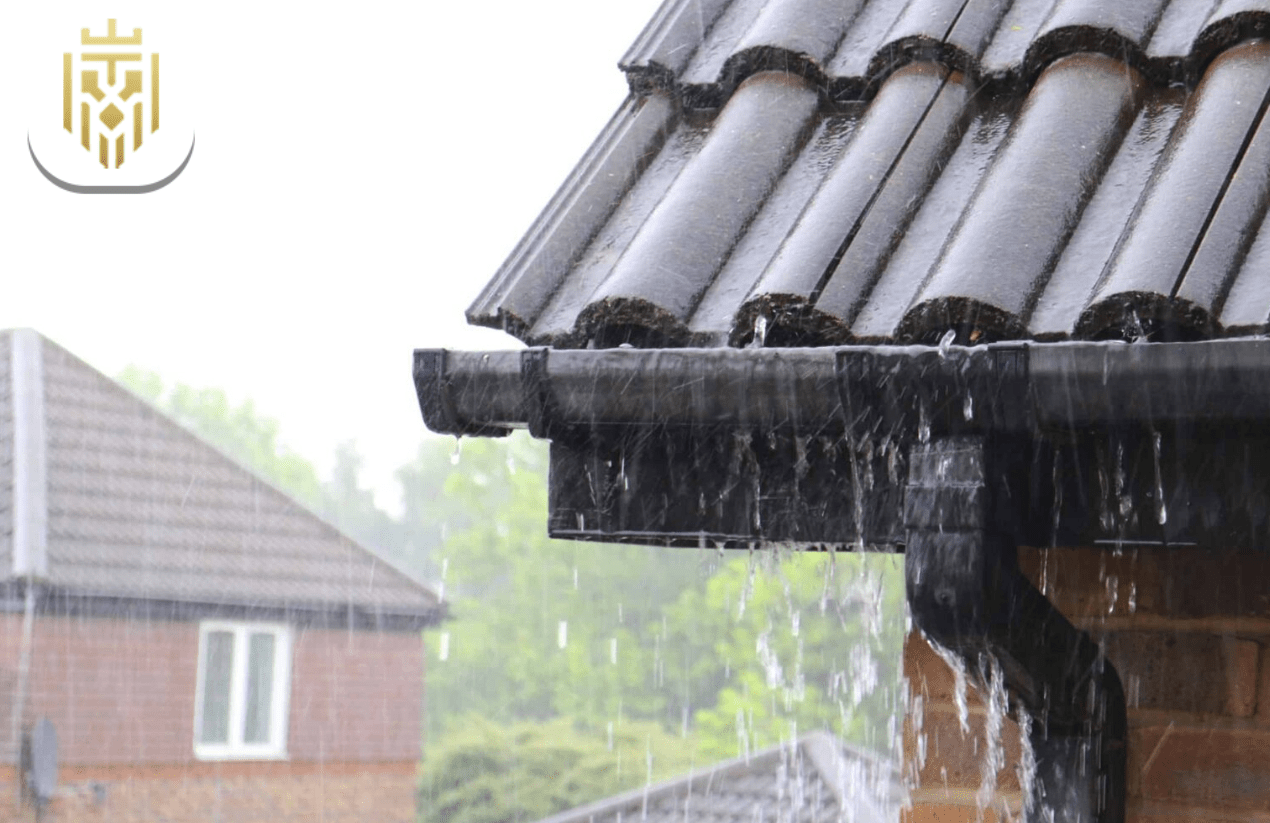
Gutter repairs do not necessarily involve the services of professionals. Most common issues can be handled by yourself with the help of the appropriate tools and time. It will not matter whether you are repairing a leak, adjusting brackets, or changing a downspout, these steps are going to take you through it all.
Gather Required Tools and Materials
Get ready all the tools before beginning any kind of repair work. This is to assist in making it faster and safer. You may need:
-
Ladder
-
Work gloves
-
Gutter scoop or trowel
-
Garden hose
-
Waterproof gutter sealant
-
Aluminum or patch kit flashing.
-
Screwdriver or drill
-
Substitute them with hangers or brackets.
Clean the Gutters Thoroughly
The first thing to do before repairing your gutters is to clean them. Clean off trash including twigs, leaves and mud with a scoop or a pair of gloved hands. Hose the gutters to ensure the flow of water is correct and to detect where there is any blockage. Washing makes sure that the leaks, cracks, and damages can be seen in order to be able to repair it properly.
Fix Leaks in Gutters
Fixing leaks is one of the most important parts of learning how to repair gutters. The reasons and solutions of leaks are different. After cleaning and drying the area, identify the necessity of sealant, patch or new hardware.
Small Holes
Waterproof gutter sealant is easy to use in sealing small pin-sized holes. Put the sealant over the hole and rub over to create smoothness. This is an easy fix which is very long lasting in case the area is first cleaned and dry.
Larger Holes
A repair of larger holes will require a more robust repair. Take a flashing of aluminum or gutter patch kit a little bigger than the hole. Apply sealant on the damaged area, press the patch firmly into the damaged area and seal the edges once again. This forms an impermeable shield and is a repair to the functionality of the gutter.
Repair Loose or Sagging Gutters
Gutters are to be inspected to ensure that the brackets are loose or missing. Screws should be tightened and damaged hangers are to be replaced in order to support the gutter. In case the slope of a gutter is not equal, one should move the place of brackets in such a way so that water could move in the right way to the downspout. The correct alignment will ensure that there is no water pooling in the gutter.
Reattach or Replace Downspouts
Check down spouts, and make sure that they are well attached. Tighten loose screws, fit broken parts and straps to fasten them to walls on the outside. Ensure that downspouts are at a sufficient distance away in order to avoid moisture accumulation and soil erosion.
Seal Gutter Seams
Sectional gutter systems have weak points in the form of seams. Use gutter sealant on the inner and outer seams to avoid slow water leaking. Do not permitt the sealant to dry out and then finally permit water flow. Seam sealing assists in leak protection on a long term basis.
Replace Rusted Sections
In case rust has left the gutter with big holes or in a weak way, change the damaged part completely. Removing the damaged part and attaching another segment using connectors and sealant is a long term solution. Where the corrosion may be widespread, it may be best to upgrade the whole gutter system.
Tips to Keep Your Gutters Last Longer
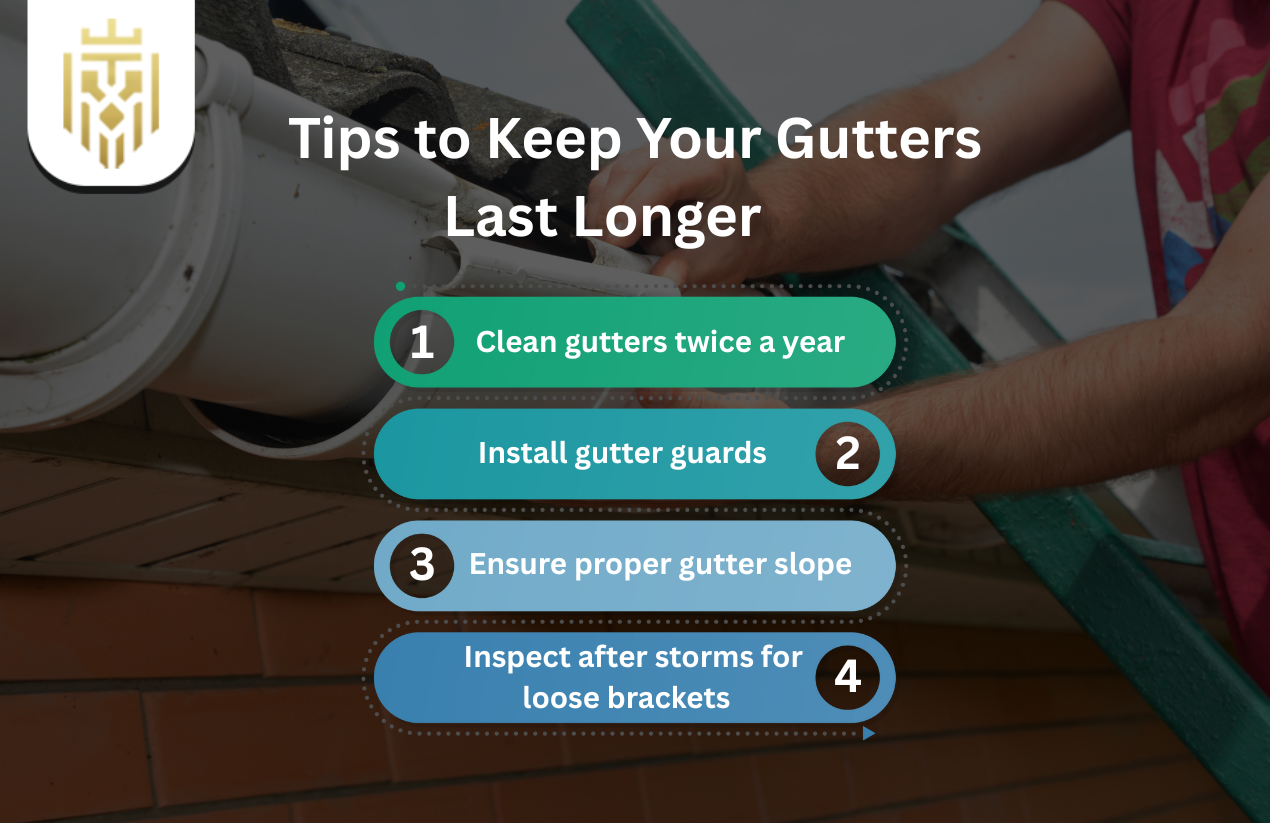
The secret of avoiding future gutter problems is to do regular maintenance. There are few practices that you can perform to maximize the life of your gutter system and minimize the number of repairs you will need as time goes by.
Clean gutters twice a year
Frequently cleaned off (typically during spring and fall), this prevents the accumulation of debris that causes clogs and sagging. In a location where there are more trees, you might have to have your gutters cleaned more often. The overflow and structural damage can be prevented by routine cleaning.
Install gutter guards
Gutter guards serve as a shield to keep away debris, yet run water through them. Gutter guards do not make the cleaning job to be nonexistent, but they make the cleaning process to be less frequent and easily avoid heavy clogs thus making the cleaning of the gutters to be less difficult.
Ensure proper gutter slope
Gutters should not be laid flat as this would not allow water to flow smoothly. When the slope is extremely flat, the water will accumulate and lead to sagging. In case they are too steep, water will fly through too fast. Sloping gutter will ensure that it drains well, which will avoid erosion in the long run.
Inspect after storms for loose brackets
Following the rainy weather or strong winds, inspect your gutter system to ensure that the screws are not loose or the brackets are not misfitted. Aggressive fixation or small adjustments would help to avoid severe sagging and structural tension.
FAQs
1. How to repair gutters?
To fix gutters, clean, check holes of gutters or sagging, use sealant or patches on any leaky points, tighten brackets and also ensure down spouts are firmly in place. To avoid damage, it is necessary to maintain it regularly.
2. What are the most common problems found in gutters?
The most common are leaking gutters, hanging gutters, plugged gutters, broken downspouts and rust.
3. How to repair leaky gutters?
Wipe off the damaged part, dry thoroughly and use gutter sealant on small holes or apply a patch over big holes. Re-seal seams as needed.
4. How often should you inspect gutters for damage?
Check gutters after every two years, particularly after a storm so that issues can be early determined.
5. When should you call a professional for gutter repair?
When your gutters are too damaged or the gutters are difficult to access or you are uncertain on how to carry out the repair process without risking your life, then invite an expert.