What Is Paperless Drywall?
The paperless drywall is a substitute for the conventional paper surface in which a fibreglass mat is used and offers better resistance against mould and mildew. It is important to know what is paperless drywall to modern interiors since it adds longevity and performance to the interior wall that is likely to be subjected to humidity or other damp environments.
Benefits of Paperless Drywall
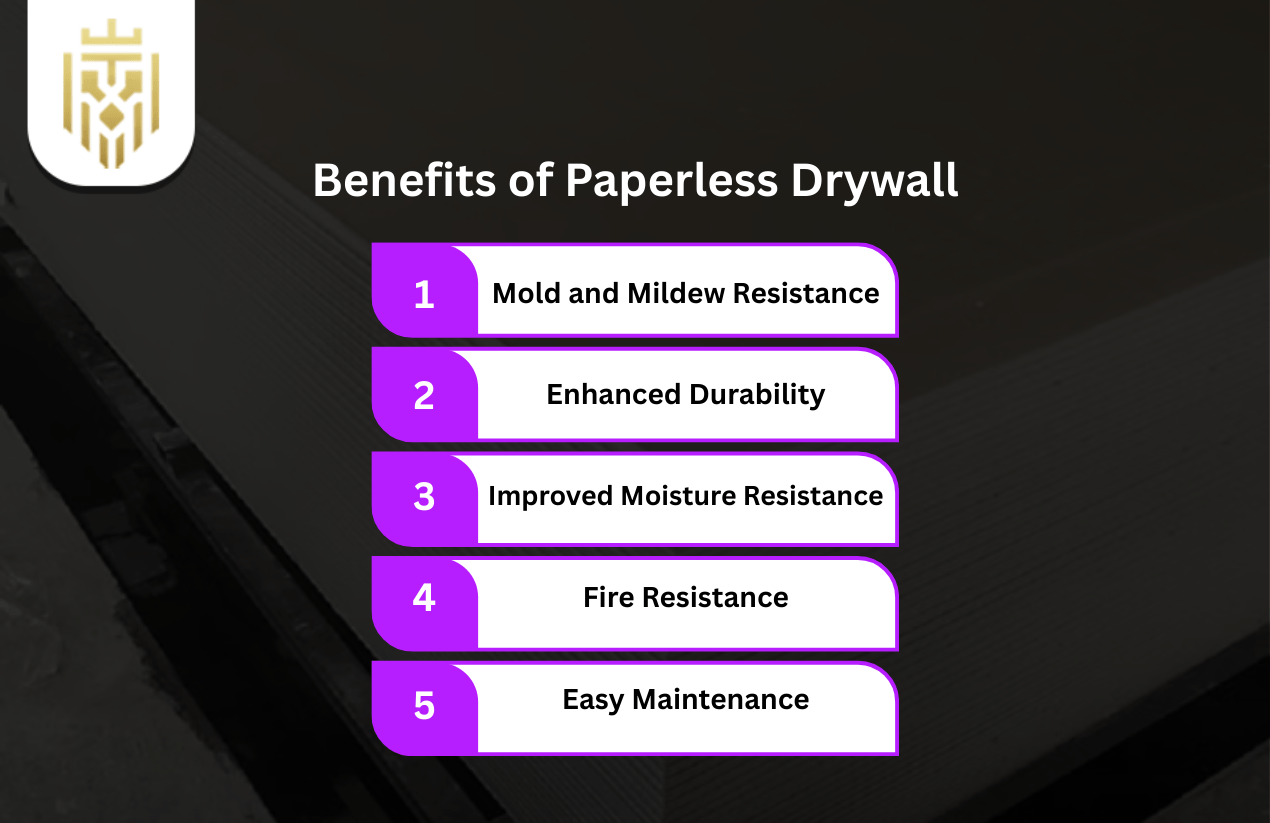
Some of the advantages of paperless drywall are its greater resistance to mould, increased resistance to wear and tear and easy maintenance. It suits perfectly in the basement, kitchen and bathroom, where the moisture can vary greatly, and so it is one of the best and longest-lasting options in terms of installation and finishing of the drywall project.
Mold and Mildew Resistance
Mold-resistant surface is one of the most outstanding advantages of paperless drywall. Its fibreglass facing avoids the acceptance of moisture thus providing clean, healthy interior walls that cannot encourage the growth of mildew, even in the high-humidity or poorly ventilated setting.
Enhanced Durability
Fibreglass drywall has a high impact resistance compared to paper-faced panels. This aspect renders paperless drywall to be an excellent solution in commercial environments or high-traffic locations, where the continuity of smooth drywall panels and structural integrity is more essential than traditional alternatives of drywall.
Improved Moisture Resistance
Paperless drywall is an improvement on regular drywall since it has a non-organic surface, which does not absorb water. This improves the life of drywall sheets, lessening both maintenance and assisting in maintaining the life cycle even in continually damp or moisture-laden surroundings.
Fire Resistance
Paperless drywall involves glass mat facings, which are more resistant to fire compared to the paper surfaces in ordinary drywall. The trait is a source of safety and protection to interior walls, and it is therefore used in the construction environment that requires a fire rating.
Easy Maintenance
Paperless drywall does not need much maintenance because it has a mold-resistant surface. The material is not stained easily and can be easily cleaned and cannot be stained and offers long-term protection to drywall installation work in residential as well as commercial buildings.
Paperless Drywall vs Regular Drywall
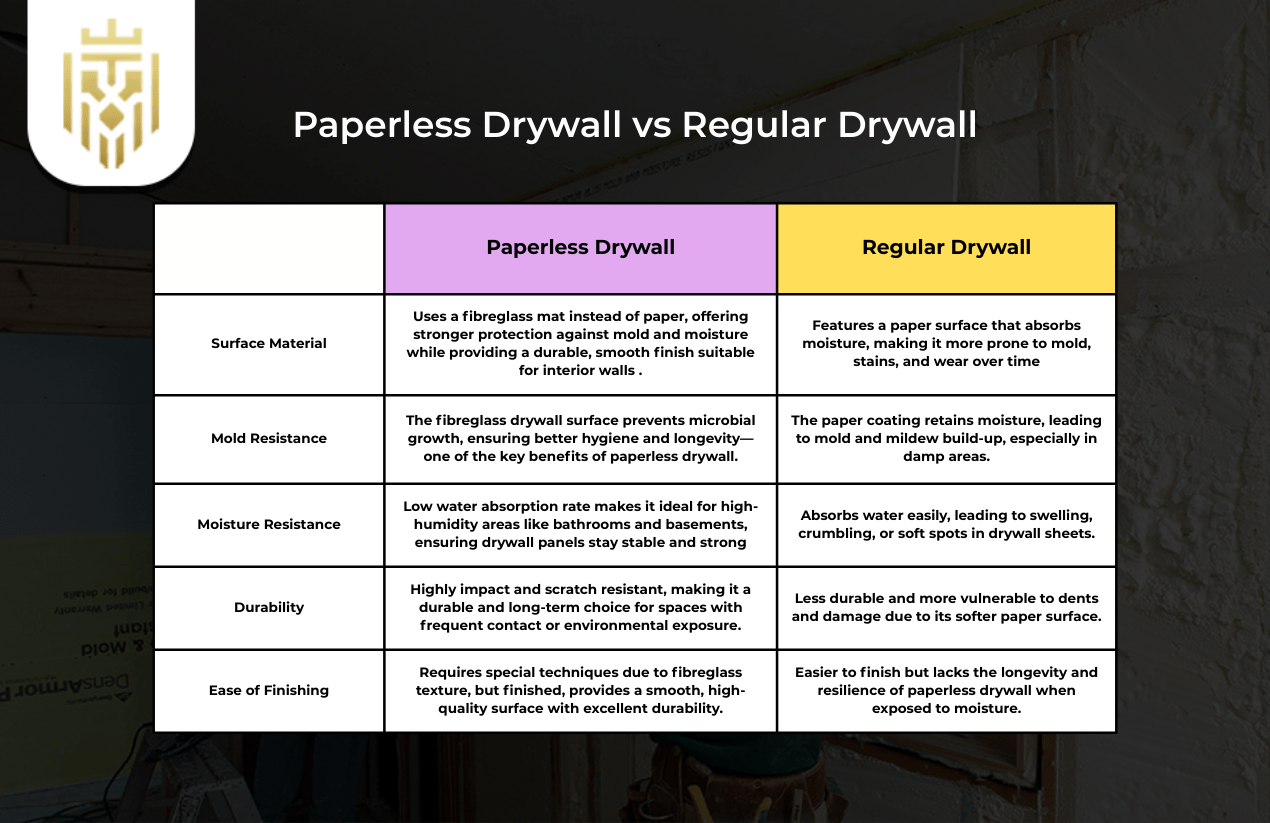
When comparing paperless drywall vs regular drywall, fibreglass facings give a greater resistance to mould, water and damage as compared to paper surfaces, which absorb moisture. This will make it more applicable to the contemporary interior walls that require long-term performance and durability.
Surface Material
Paperless drywall is characterised by a fibreglass mat rather than paper, which guarantees better protection against moulds. This variance provides it with a cleaner and more durable finish than drywall sheets utilised in conventional installations.
Mold Resistance
The most notable difference between paperless drywall and normal drywall is its mold-resistant surface. Fibreglass covers help avoid the growth of microbes, unlike paper surfaces that absorb moisture and get stained or mildewed.
Moisture Resistance
Fibreglass materials are better than the regular drywall in the paperless drywall vs regular drywall description because they have low rates of water absorption. This is ideal in bathrooms, kitchens, and basements and also makes sure that the drywall panels are strong and stable.
Durability
Paperless drywall has a higher impact and scratch resistance than the conventional ones. This is an advantage that predisposes fibreglass drywall as a long-term investment, particularly where this type of wall is most likely to be touched or worn out due to environmental factors.
Ease of Finishing
The paperless drywall takes a bit different processes due to its fibreglass texture to finish it without paper. Nonetheless, when finished, it provides more finer interior wall, with a greater level of durability and standard when compared to conventional drywall installations.
Where to Use Paperless Drywall?
Paperless is more suitable in often damp spaces like bathrooms, basements, kitchens, and laundry rooms. The longevity and protection in its residential and commercial environment are the results of its mold-resistant construction.
How to Install Paperless Drywall?
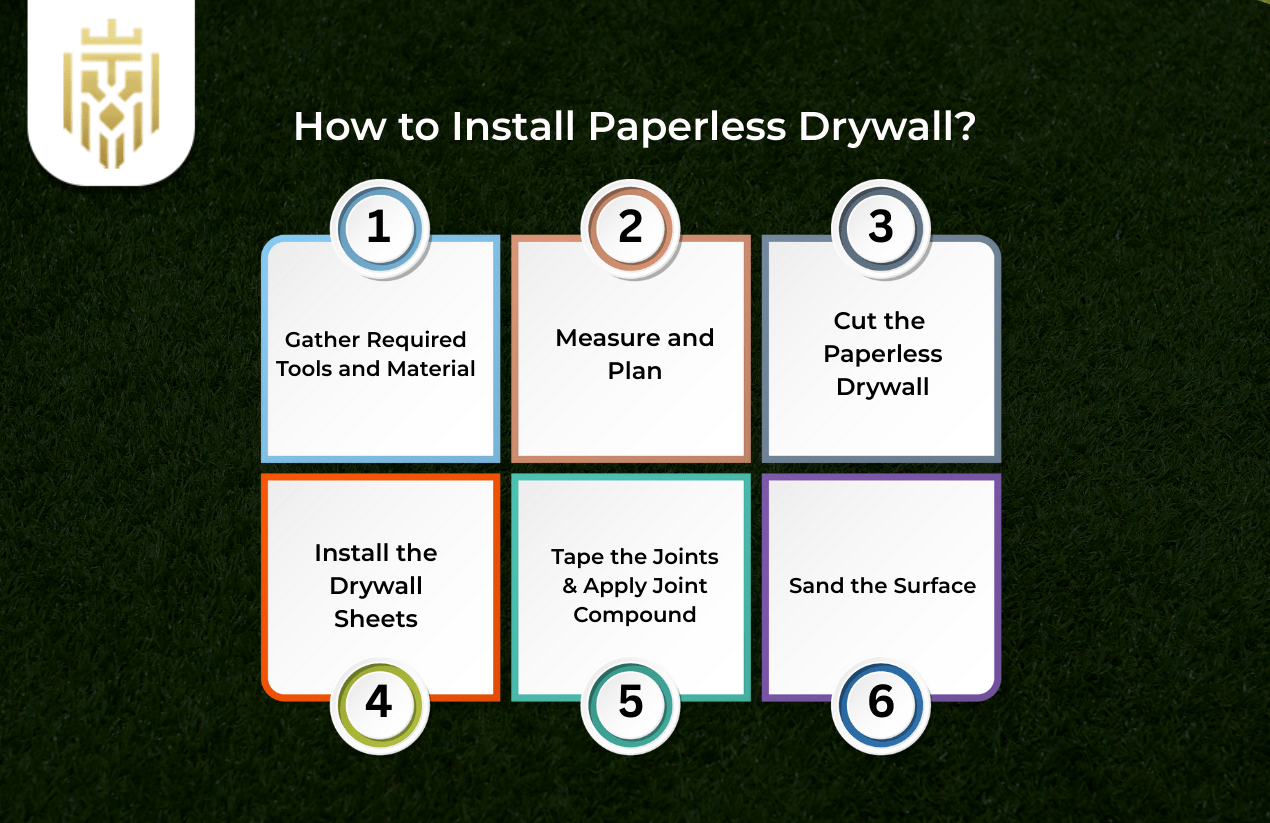
By knowing how to install paperless drywall, one can be sure that results will be long-lasting and proper. The use of a paperless drywall installation guide systematically assists in minimising waste, enhancing the accuracy of fitting, and improving the effectiveness of drywall installation on different types of walls.
Gather Required Tools and Material
To start up according to the paperless drywall installation manual, prepare all the necessary materials like screws, glue and fibreglass boards. Proper arrangement of the drywall installation is prepared to ensure that the installation of your dry walls sheets is in a smooth manner.
Measure and Plan
When learning about paperless drywall installation, it is important that the measurement be accurate. The right planning also means that there are fewer cutting mistakes, smooth joints and enhanced utilisation of the drywall panels, enhancing the level of accuracy in installations.
Cut the Paperless Drywall
Use a sharp utility blade to cut fibreglass drywall and create clean edges. Proper cutting ensures that the drywall sheets are installed correctly, requiring less patchwork and improving the finished surface appearance.
Install the Drywall Sheets
Attach wall studs with drywall sheets using screws or adhesive. This is a major step in installing drywalls that provides uniformity of surface, which makes the interior walls strong and even.
Tape the Joints & Apply Joint Compound
Compound and taping level seams in the middle of the drywall panels, which is a guarantee of professional finishing. This is a crucial step of the paperless drywall construction that would make interior walls smooth and moisture-free.
Sand the Surface
Finally, sanding eliminates the flaws so that the paperless drywall surface is in condition to be painted or finished. The installation of drywall is topped off with proper sanding, which increases the durability and beauty of the fibreglass drywall interiors.
FAQs
1) What is paperless drywall?
Paperless drywall is a fibreglass drywall that is a substitute for the paper-faced panels. It is also resistant to mould, water and damage, thus suitable when used as an interior wall in humid areas such as bathrooms and basements.
2) How to install paperless drywall?
Paperless drywall installation requires measuring, cutting and fixing drywall sheets with a screwdriver or glue. Use a paperless drywalling installation guide to tape, compound and sand to a smooth and moisture-resistant finish.
3) Where to use paperless drywall?
Install drywall that has no paper in wet environments, including in the kitchen, the laundry room and the basement. It is mould resistant and durable; hence, is the best choice for long-term use in drywall construction, both at home and in the office.
4) What are the benefits of paperless drywall?
The paperless drywall benefits are high levels of mould resistance, durability and low maintenance. It offers enhanced drywall that is resistant to moisture and offers permanent and clean surfaces for the interior and makes the walls durable in modern constructions.