How To Fix Squeaky Floors?
Squeaky floors are among such minor home problems that may soon turn into a major irritant. That creak or squeak when you step on it can be irritating even to the most silent moments and in the long run, it will be a warning of the structural damage to your flooring. The good news? Squeaky floors do not need to be ripped up completely.
Whether you’re dealing with hardwood, subfloor, or carpeted areas, this guide will walk you through how to fix squeaky floors from above or below, along with tips to prevent future noise and maintain a sturdy, quiet floor.
What Causes Squeaky Floors?

It is imperative to know what produces the noise in the first place before learning how to fix the squeaky wood floors either on the top or bottom. Squeaks tend to happen when various elements in your floor structure clash with one another such as wood to wood, nails to joists, or subfloors to subfloors. We will decompose the most widespread causes.
Loose Floorboards
Loose floorboards are one of the leading causes of squeaky floors. Nails or screws used to fix the floor boards in place may loosen over time as a result of foot traffic, dampness or natural expansion and contraction of wood. When this occurs, the boards slide in a little way with every step making that so-called squeak.
This may be avoided by regular checking and tying down, but in case the floorboards are already loose, then you will have to re-fix them with the proper instruments and styles.
Subfloor Separation
Subfloors are used in multi-layer flooring as the top flooring layer is supported by the subfloor. The subfloor may come off the joists or fasteners may loosen, so that this results in the development of gaps. When walking over these surfaces, the friction and noise are heard.
The simplest way to re-glue a squeaky floor would be to get to the bottom of the floor by way of a basement or crawl space and re-glue it to the joists with screws or glue.
Wood Expansion and Contraction
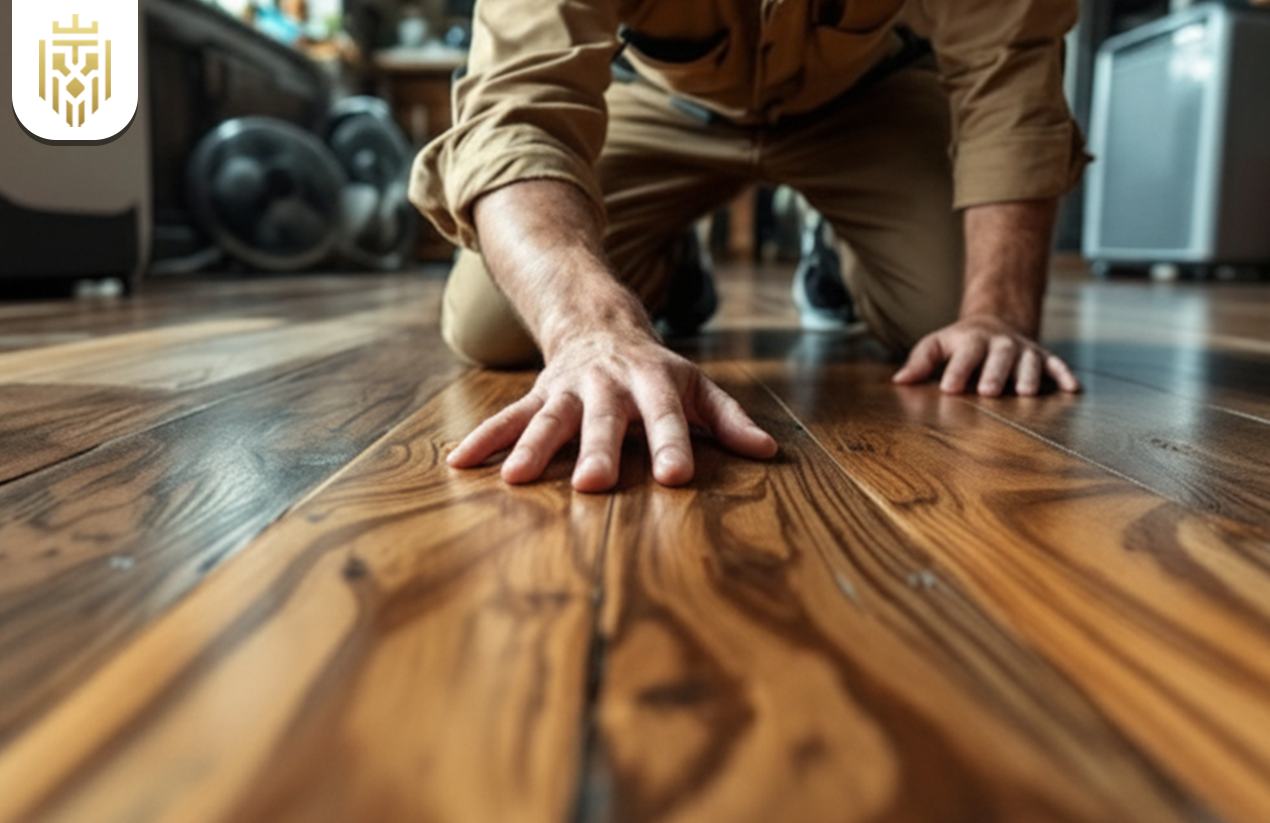
Wood is a natural substance that swells and dries when it is wet. This continuous movement over time creates a space between floorboards or between boards and subfloor creating squeaks. The ability to control the amount of humidity in your house and to acclimatize the wood prior to installing it is the way to prevent such issues in the future.
Improper Installation
In other cases, squeaky floors are caused due to improper installation. Without nailing or screwing the flooring to the sub floor or unevenly applying adhesive, between-layer movement is bound to occur. This would be possible in hardwood and engineered floors.
Assessing the squeak could be necessary in case it is caused by problems with installation to prevent additional harm to the structure.
How to Fix Squeaky Floors?
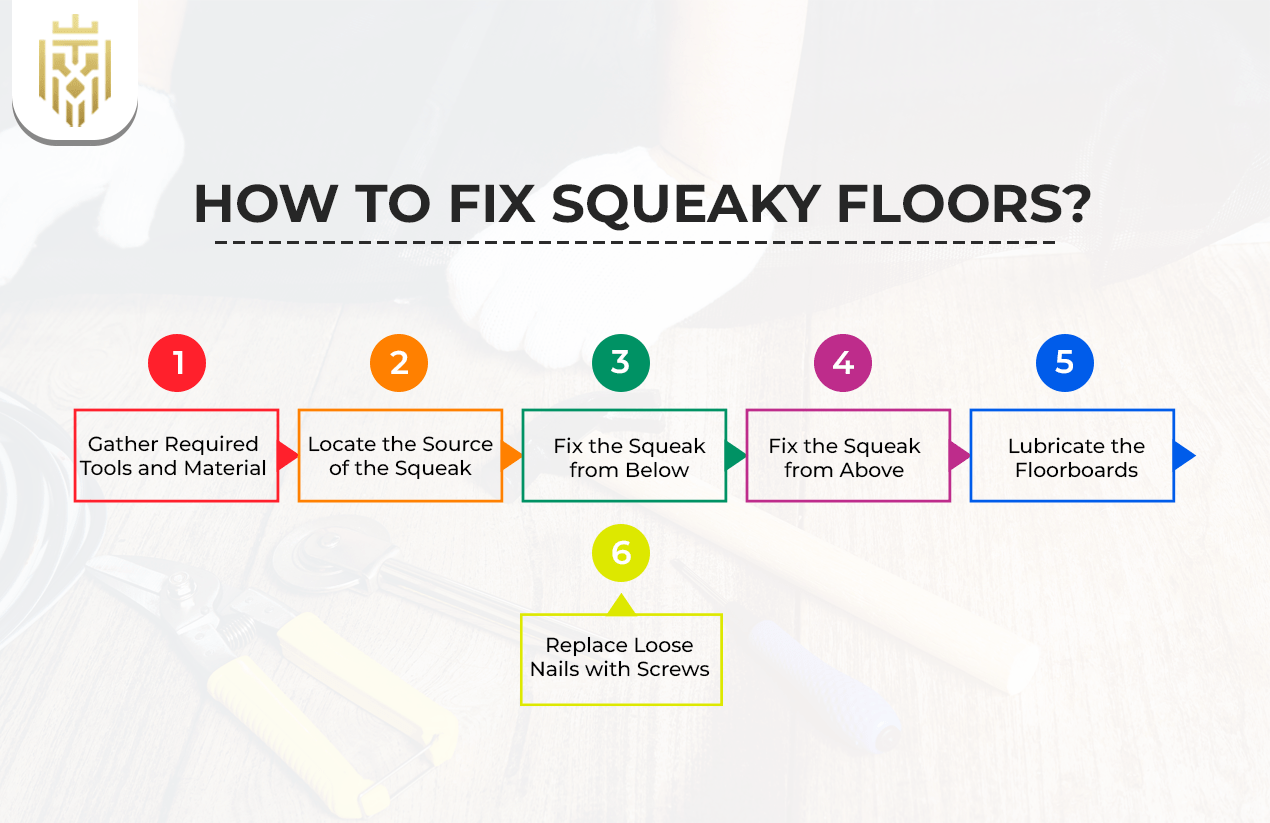
Now that you know what causes the noise, let’s get into how to fix squeaky floors effectively. The issue can be solved in several manners, depending on the flooring and accessibility; either by accessing the floor beneath (through the subfloor) or by use of the upper layer (through the surface).
Gather Required Tools and Material
Before you start, collect all necessary tools to ensure a smooth repair process. You’ll typically need:
- A drill and wood screws
- Construction adhesive or wood glue
- Wooden shims
- Hammer and nails (if applicable)
- Lubricant powder (like graphite or talcum powder)
- Carpet knife (for carpeted floors)
Having everything ready helps you complete the repair efficiently and minimize damage to the flooring.
Locate the Source of the Squeak
To repair the squeaky floors, then first find where the noise is. Stroll about the floor and pay attentive hearing. Get another person to walk whilst you look down, as far as possible.
Mark the squeaky part using the chalk or a tape. Before you begin drilling or shoeing in shims it is best to identify the area of the squeak and it is so much harder to find the actual problem because the squeaks usually travel through the floor boards.
Fix the Squeak from Below
In case you gain access to the area below (such as a basement or a crawl space), it is often less invasive and simpler to fix the squeak.
Secure Loose Subflooring
In case the subfloor is no longer attached to the joists, use wood screws to firmly attach it. Drill the subfloor into the joists where any gaps or movement can be observed. This assists in drawing the layers back together, removing friction, and preventing the squeak.
To make it more stable, use construction adhesive on the joist lines and screw the subfloor. This technique not only fixes the sound, but it also makes the structure stronger.
Insert Wooden Shims
In case you can see a small space between a subfloor and a joist, slightly tap in a wooden shim covered with wood glue. This occupies space and makes it immobile. But be careful not to beat the shim too strongly, it may raise the floorboard and do more harm.This is an easy but efficient solution especially on old houses where the subfloors are already old.
Fix the Squeak from Above
The problem will have to be either repaired on the top when you cannot get to the floor below, as happens in apartments or rooms where there is no basement. We will consider the techniques of various types of floors.
For Hardwood Floors
To repair the squeaky hardwood floor, trace the squeak and drill a pilot hole into the floorboard into the joist underneath. Then firmly screw it with a trim screw to secure the board to the sub floor. The screw head can be concealed with a piece of wood or a wax stick of the same colour to have a smooth surface in case it is done carefully.
Or, sprinkle graphite powder or talcum powder between the boards to lubricate the points of friction. It is a fast, non-invasive method of drill-free silencing minor squeaks.
For Carpeted Floors
To repair squeaky floors on the ceiling underneath the carpet, go to a squeak repair kit, whereby the screws can be driven through the subfloor without destroying the carpet. These screws are made to cut off slightly below the floor so that the carpet remains.
Provided that the squeak is small, you can also raise the edge of the carpet and place screws or some sticky paste on the subfloor area beneath. Do not forget to shake the carpet back in place.
Lubricate the Floorboards
In the case of squeaks that develop as a result of friction between floorboards made of wood, it can be easily addressed by solving the problem of friction. Sprinkle powdered graphite, baby powder or talcum powder inside the cracks and rub it lightly on using a soft cloth. This prevents rubbing of the boards and also silences the noise.
Although that is just a temporary solution, it is a wonderful quick fix before you can carry out more permanent repairs.
Replace Loose Nails with Screws
Squeaky floors are in most instances due to the fact that the nails have been loosened with time. Rather than re-hammering them, take away the old nails and use flooring screws which will hold better and reduce movement.Plunge the screws into the floorboard into the lower joist to form a tighter hold. This is among the best long term ways of repairing squeaky wood floors at the top.
FAQs
1) How to fix squeaky floors?
Squeaky floors can be tightened by screwing loose boards together, nailing subflooring or placing shims between boards or lubricating them. Repairs may be accessed either above or below the floor depending on their accessibility.
2) What are the common causes of squeaky floors?
Some of the common causes are loose floorboard, subfloor separation, movement of wood over humidity and improper installation. One can identify the cause in order to estimate the most appropriate repair technique.
3) How to fix squeaky hardwood floors?
Squeaky hardwood floors can be repaired by finding the source of the noise and hammering trim screws into the board and into the joist. Another thing you can do when applying between boards is to apply graphite powder to ensure that friction is reduced.
4) How to fix squeaky floors from below?
Lay a floor beneath the subfloor, stick the adhesive to the joists, and use screws to fasten the loose parts. In case there are gaps, stabilize the floor with shims of wood.
5) How to fix squeaky floors from above?
Loose boards can be held in place with trim screws, or on carpeted floors a squeak repair kit. Minor squeaks can also be reduced with the help of lubricants such as talcum powder or graphite.